Market landscapes built to survive scrutiny.
We turn messy public evidence into normalized, source-backed research products your team can search, compare, audit, and use in a real decision. Not a pile of links, and not a polished PDF with no provenance.
What is inside a research product
A defined universe, not a search result.
Every landscape starts with explicit inclusion and exclusion criteria, so the boundary of the market is a stated decision you can argue with rather than an accident of which queries we happened to run.
- Versioned inclusion criteria
- Stated exclusions and coverage boundaries
- Identity resolved across names, domains, ownership, and status
One vocabulary across the whole dataset.
Categories are fixed before classification and versioned afterwards, so two records described by different sources still end up comparable. Specifications are normalized into structured fields with canonical units and explicit null semantics.
- Versioned taxonomy, one controlled vocabulary
- Canonical units and schema validation
- Normalized descriptions grounded in cited sources
The source is part of the product.
Material claims trace back to where they came from. Scores carry the criteria they were judged against, a confidence level, and a rationale, so a reader can disagree with a specific judgment instead of distrusting the whole file.
- Criteria-level scores with linked evidence
- Confidence and rationale on material claims
- Official sources preferred, corroborated where required
A release, not a dump.
You receive a searchable navigator, the structured dataset, an evidence digest, and release notes. Exports carry checksums, so a research release is reproducible and a later version can be diffed against it.
- Web navigator, XLSX, CSV, evidence digest
- Versioned releases with review notes
- Optional reviewed refreshes on a schedule
A market map is only as good as its exclusions.
Most market research stops at finding and summarizing. The work below is what separates a research product from a list.
| Typical market research | A decision-grade research product |
|---|---|
| A list assembled from search results | A defined universe with explicit inclusion and exclusion criteria |
| Company names treated as clean entities | Identity resolution across names, domains, ownership, status, and duplicates |
| Copy-pasted marketing descriptions | Concise normalized descriptions grounded in cited sources |
| Categories improvised while researching | Versioned taxonomy with one controlled vocabulary across the dataset |
| One-pass AI enrichment | Multi-stage research with deterministic validation and expert review |
| A score with little explanation | Criteria-level scores, confidence, rationale, and linked evidence |
| Specs copied in inconsistent units | Structured fields, canonical units, null semantics, and schema validation |
| Any plausible image | Exact-product visual verification, with a missing image preferred to a wrong one |
| Silent manual edits | Review artifacts, before/after audits, guarded changes, and rollback paths |
| A PDF that ages immediately | Searchable data, navigable views, exports, and update options |
Software and models do the scale work. Schemas, deterministic tests, evidence requirements, and expert judgment are what control the quality.
From a database into something you can navigate.
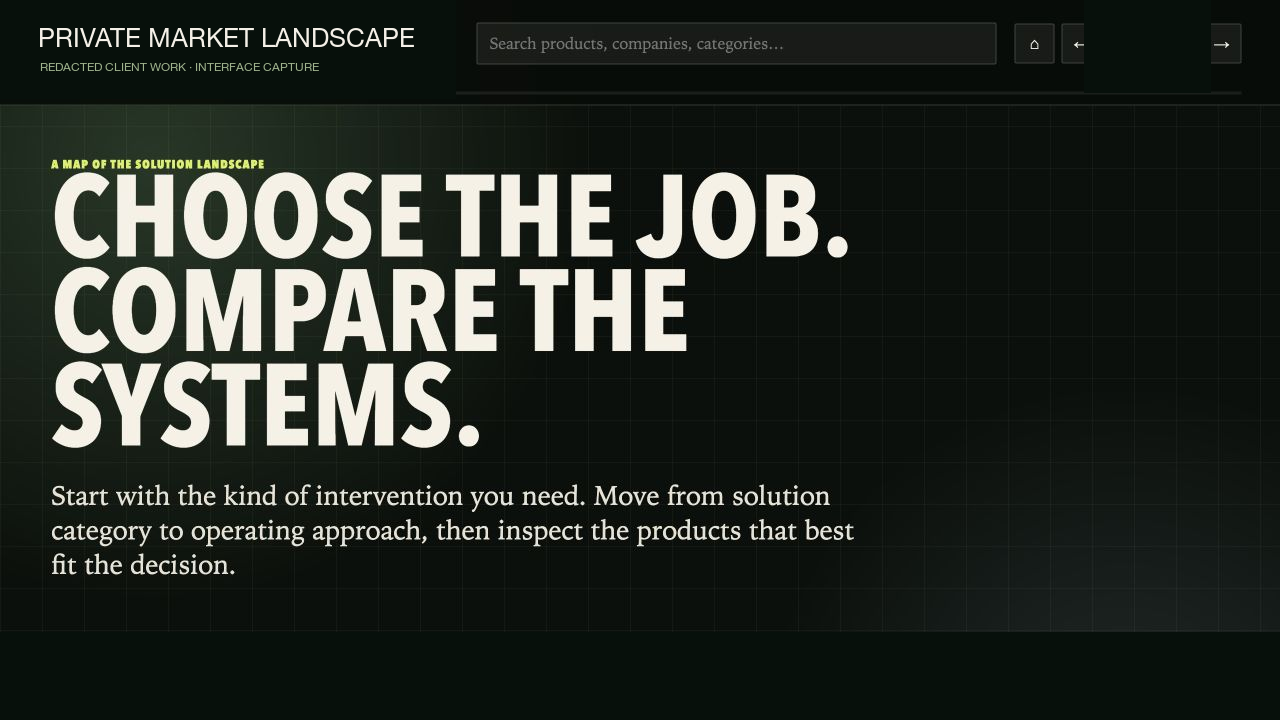
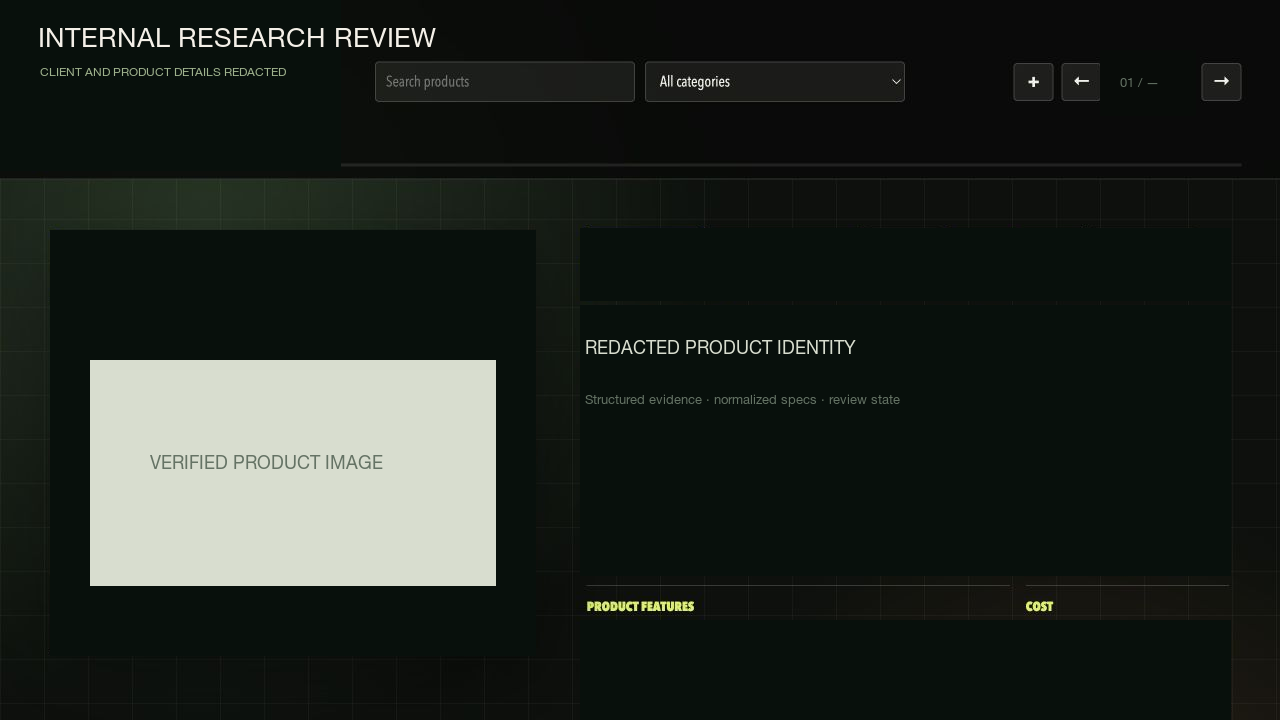
Every row should earn its place.
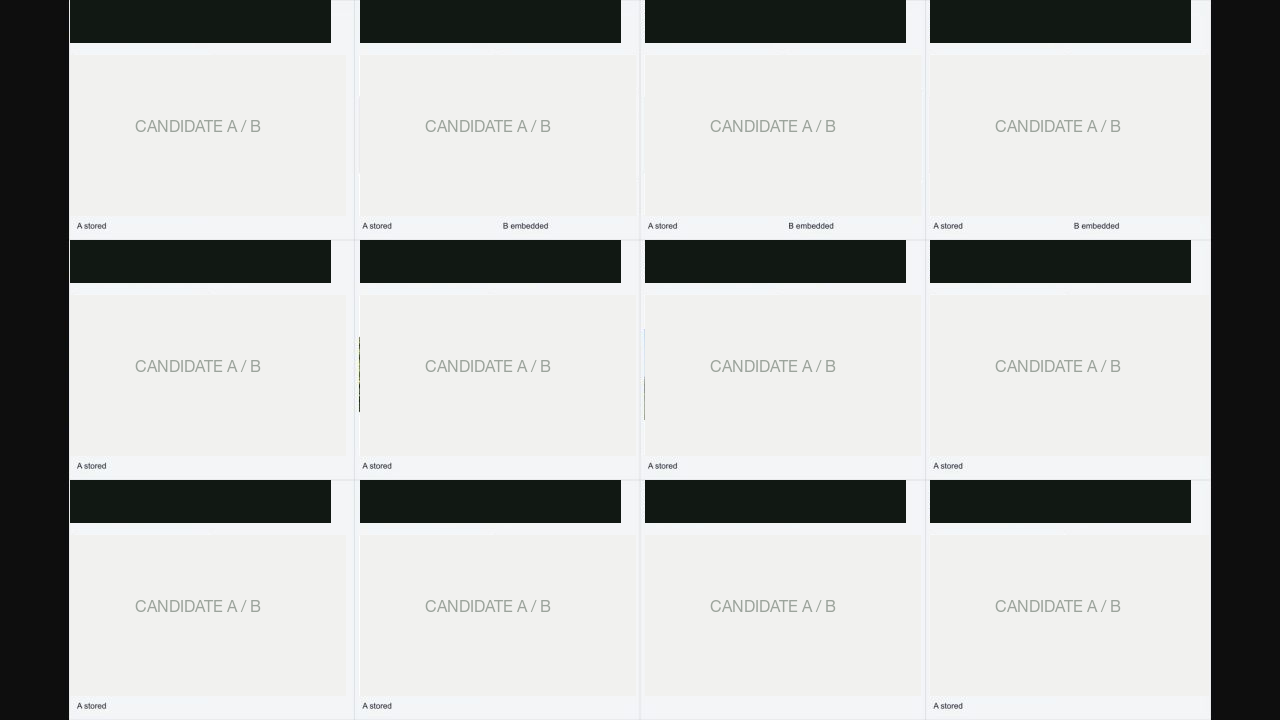
Even the pictures are a research problem. Candidate images are compared against the exact product rather than the product family, and a missing image is preferred to a wrong one.
Unknown is a valid answer. Unsupported is not.
Confidence, unknown, and needs-review are first-class states in the data. A coverage boundary is stated rather than implied, and a listed product is evidence that it exists in the market, not a recommendation.
Example engagement scale · from an anonymized technical-market engagement
Hundreds of priority products were reduced to a decision-ready shortlist. Repeated before/after audits brought defects down to a small residual review queue, high-risk corrections used guarded updates with expected-row assertions and rollback artifacts, and structured exports carry checksums so a release can be reproduced. These figures describe one engagement and are not averages or guaranteed outcomes.
What this is not
- Not a generic market report, and not a live advisory retainer.
- Not a complete census of a market. The boundary is defined, stated, and arguable.
- Not a recommendation engine. Inclusion is evidence of existence, not endorsement.
- Not real-time. Releases are versioned, with refreshes on a schedule you choose.
How a landscape is built
Six stages, each with a quality gate. Defects found during verification go back to the rules and fixtures before anything is republished — the loop is the point, not the sequence.
1 · Define
Inclusion criteria, taxonomy, research questions, and the evidence standard the release will be held to.
2 · Discover
Broad source discovery across organizations, products, documents, and regional variants.
3 · Resolve
Verify identity, active status, duplicates, variants, and ownership before anything is classified.
4 · Structure
Normalize descriptions, categories, specifications, units, and relationships into one schema.
5 · Verify
Source-backed scoring, deterministic checks, visual validation, and expert review at defined quality gates.
6 · Publish
Versioned release with a searchable navigator, exports, review notes, and optional refreshes.
Who buys a market landscape
The common thread is a decision that has outgrown a spreadsheet, and a market too fragmented to map by reading.
Strategy and market intelligence
Entering or sizing a technical market without standing up an internal research operation.
Investors and diligence leads
Screening companies and products against a consistent set of criteria, with the evidence attached.
Product and innovation
Mapping technologies, suppliers, and competitive alternatives before a build, buy, or partner decision.
What market do you want to understand?
Tell us the decision, the boundary of the market, and the evidence bar you need. We will scope a research product against it — or send a sample so you can judge the format first.