Your
member directory
is hiding a story worth covering.
We turn it into a public map of your whole sector — the kind that put Croatia's AI association on prime-time national television, and sold out Slovenia's launch event.
What happens to your member list
Not ready to upload?
Get our Data↔AI guide.
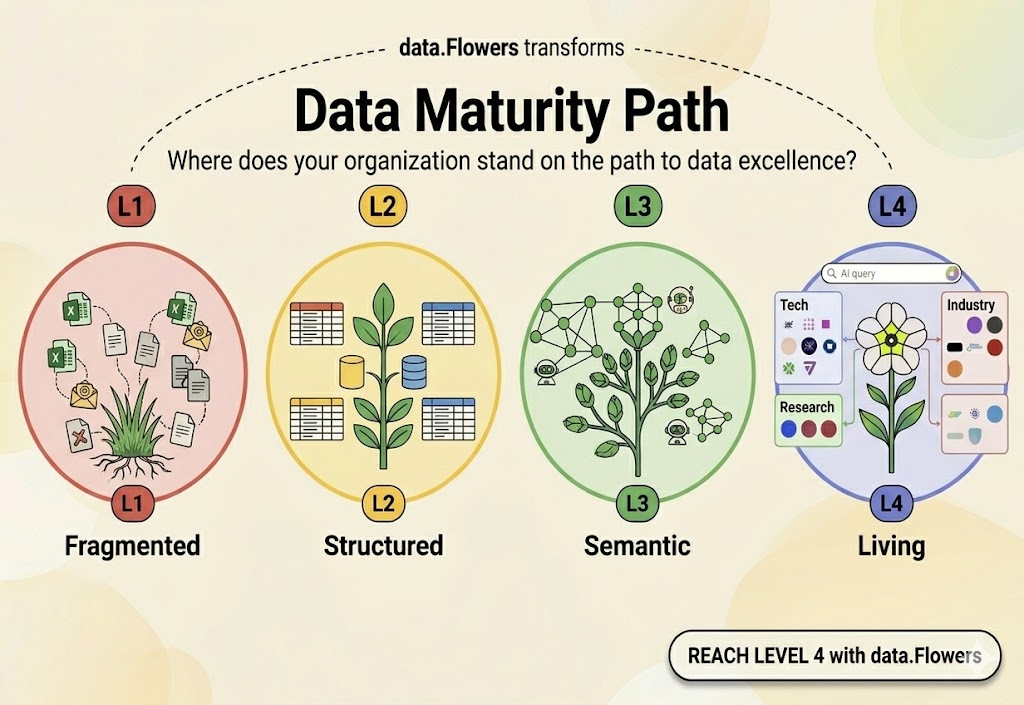
How an organization moves from scattered spreadsheets to one shared, governed dataset that both people and AI systems can use.
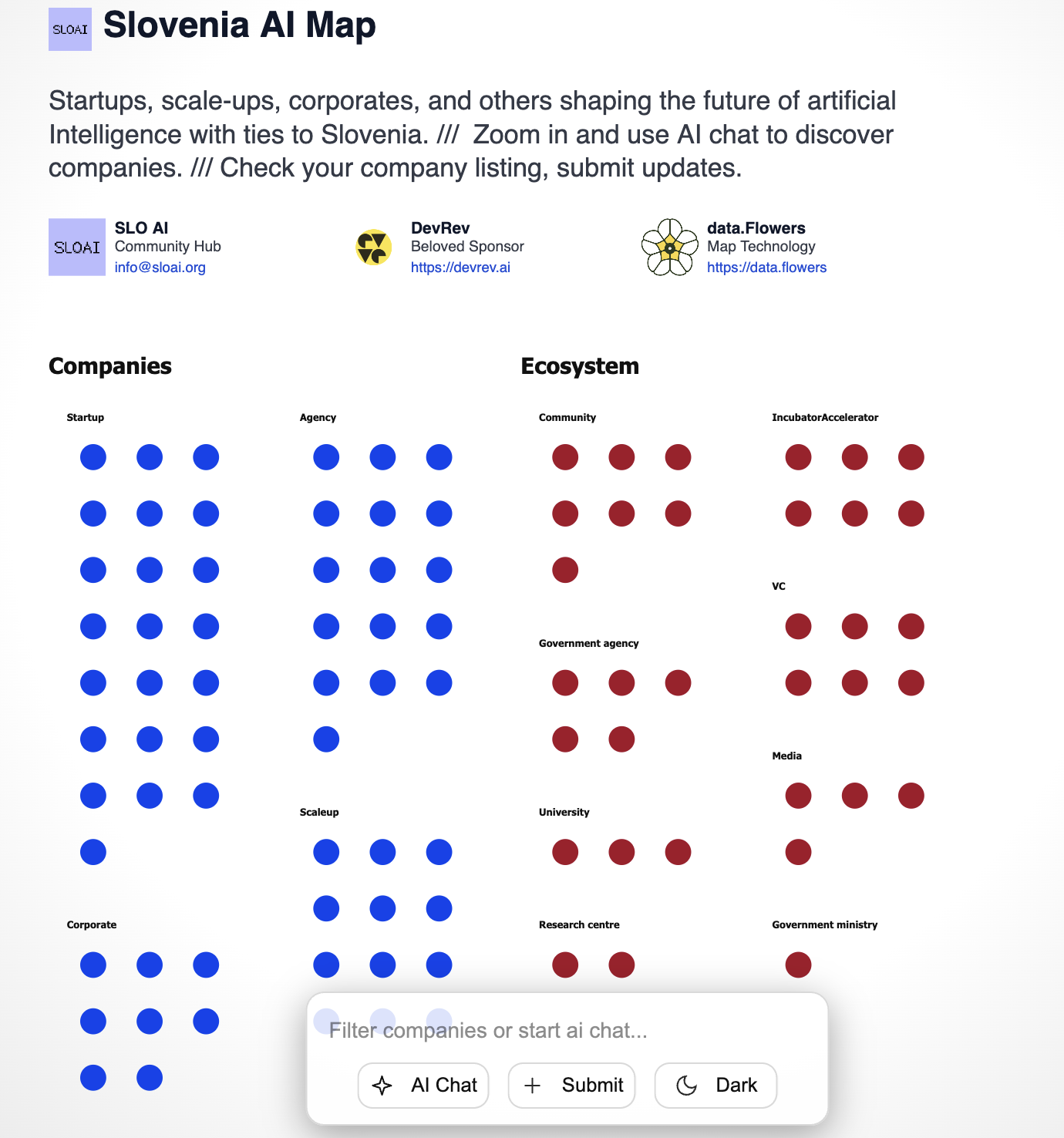
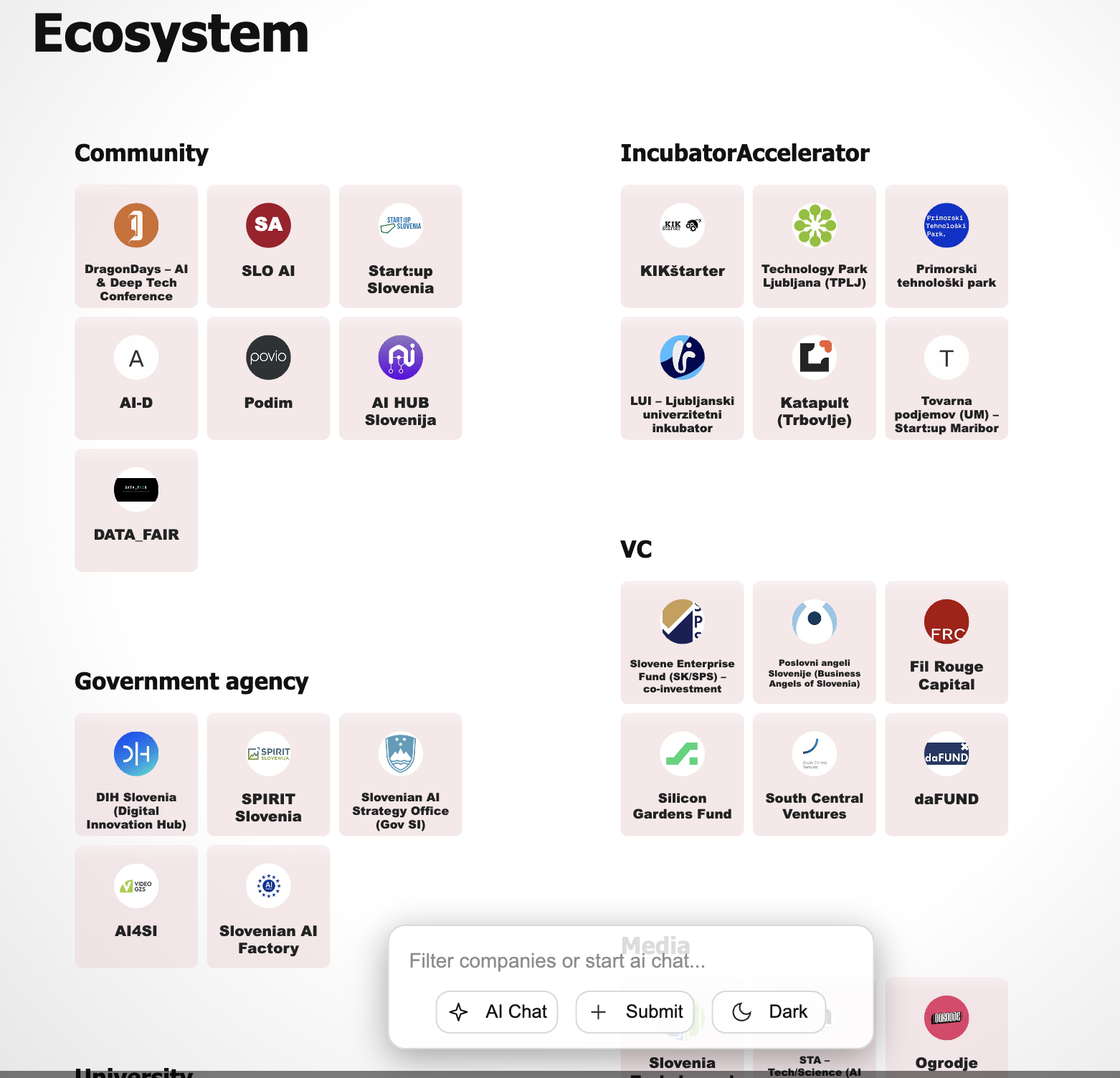
SloAI turned a growing community into a searchable ecosystem.
Slovenia's AI entrepreneurs and practitioners were already gathering through an informal association called SloAI. But there was no systematic way to see the companies, investors, and organizations shaping the country's AI ecosystem.
To turn that fragmented landscape into something the community could use, the association engaged data.Flowers to research, structure, and publish it as an interactive map.
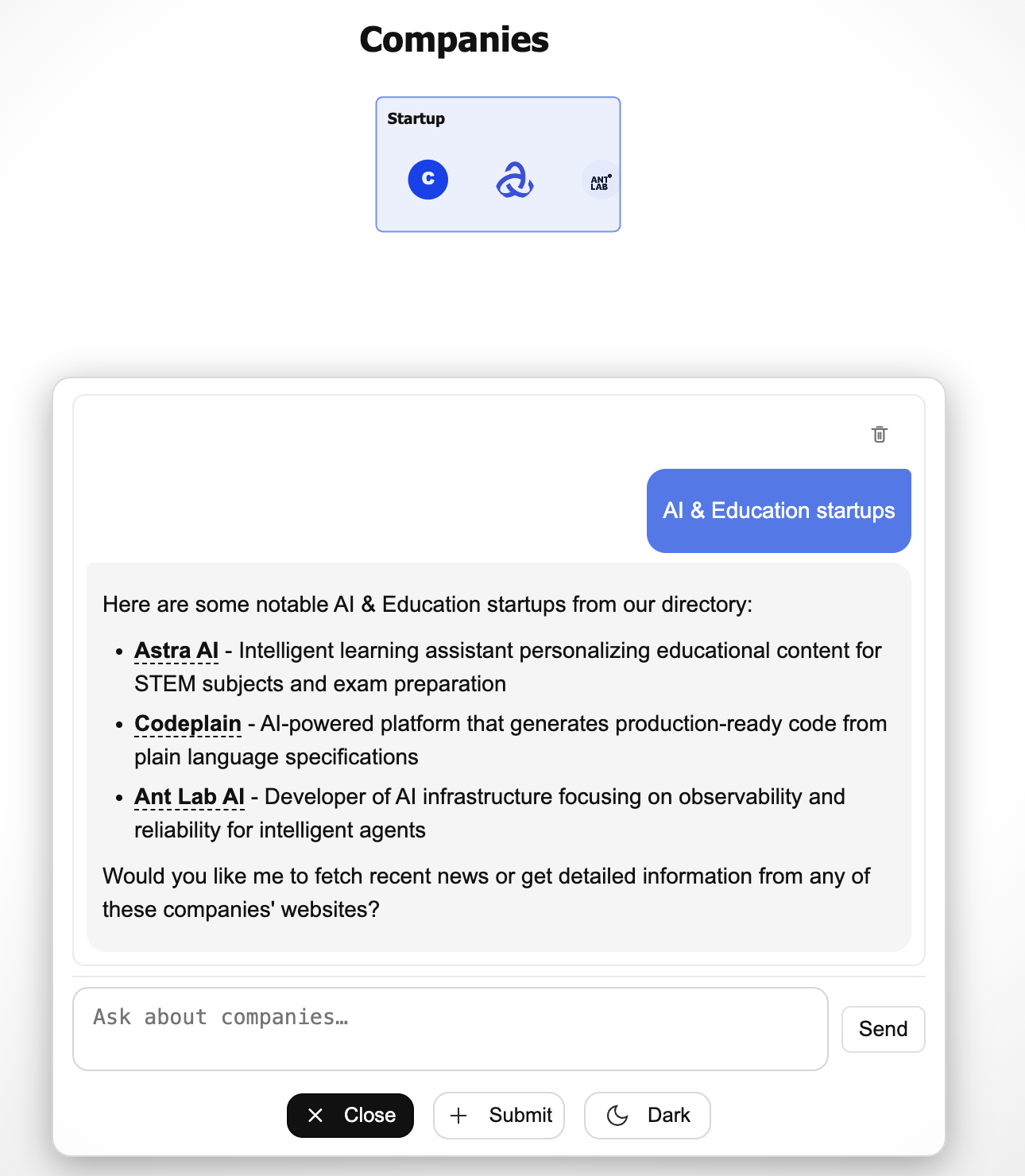
The map also includes an AI chat feature, sponsored by DevRev, that gives visitors a deeper way to search by capabilities, not just by company name.
The result is a shared public reference point: a place where Slovenia's AI community can find itself, explain itself, and keep growing.
2.5x
Growth of the database
10,000+
Social media views for the map announcement
100%
Sold-out launch event
Data.Flowers made SloAI’s practitioner community visible: the companies, entrepreneurs, investors, and builders shaping applied AI in Slovenia.
Frenk Dragar, SloAI Founding Member
CroAI created a single public source of truth for Croatia's AI ecosystem
A national AI association was sitting on an outdated spreadsheet that needed to be updated. Anyone searching had to contact the busy volunteers operating the association, or work off of hand-crafted PDFs from a year ago.
In four working sessions, we ingested and enriched their data, built a competency-based taxonomy, grew the database through user submissions, and shipped a public, AI-searchable map.
The launch was covered by national media, including prime-time television. Investors approached the association's leadership directly afterwards; reference available on request.
11.2x
Higher web traffic after map launch
National TV
Prime-time coverage of the launch
60%
New companies on the map
We finally had a single, public source of truth for Croatia's AI ecosystem: organized, searchable, and easy to share.
Damir Firšt, CroAI Board Member
Get started
-
You upload the list
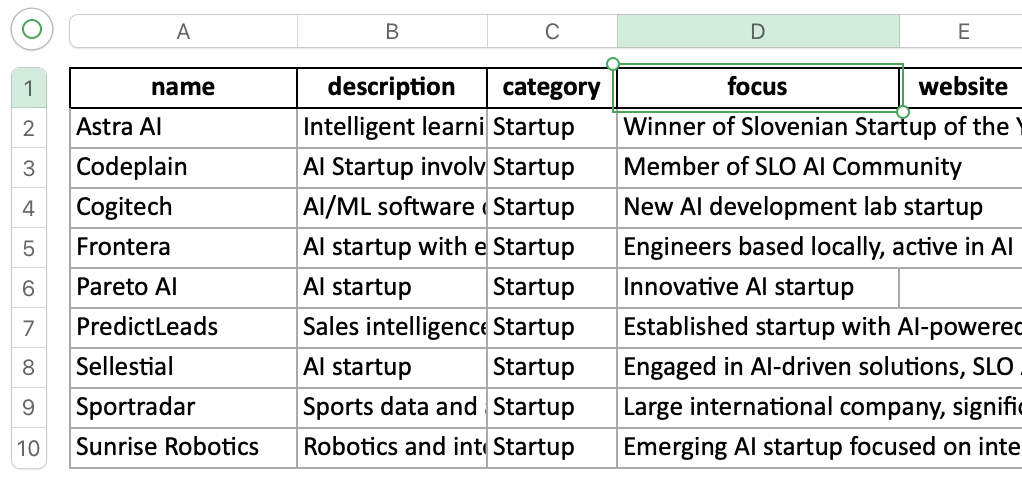
Your member list as CSV or Excel, up to 10,000 rows. No personal data needed — company names and whatever else you happen to have.
-
We tell you what is in it
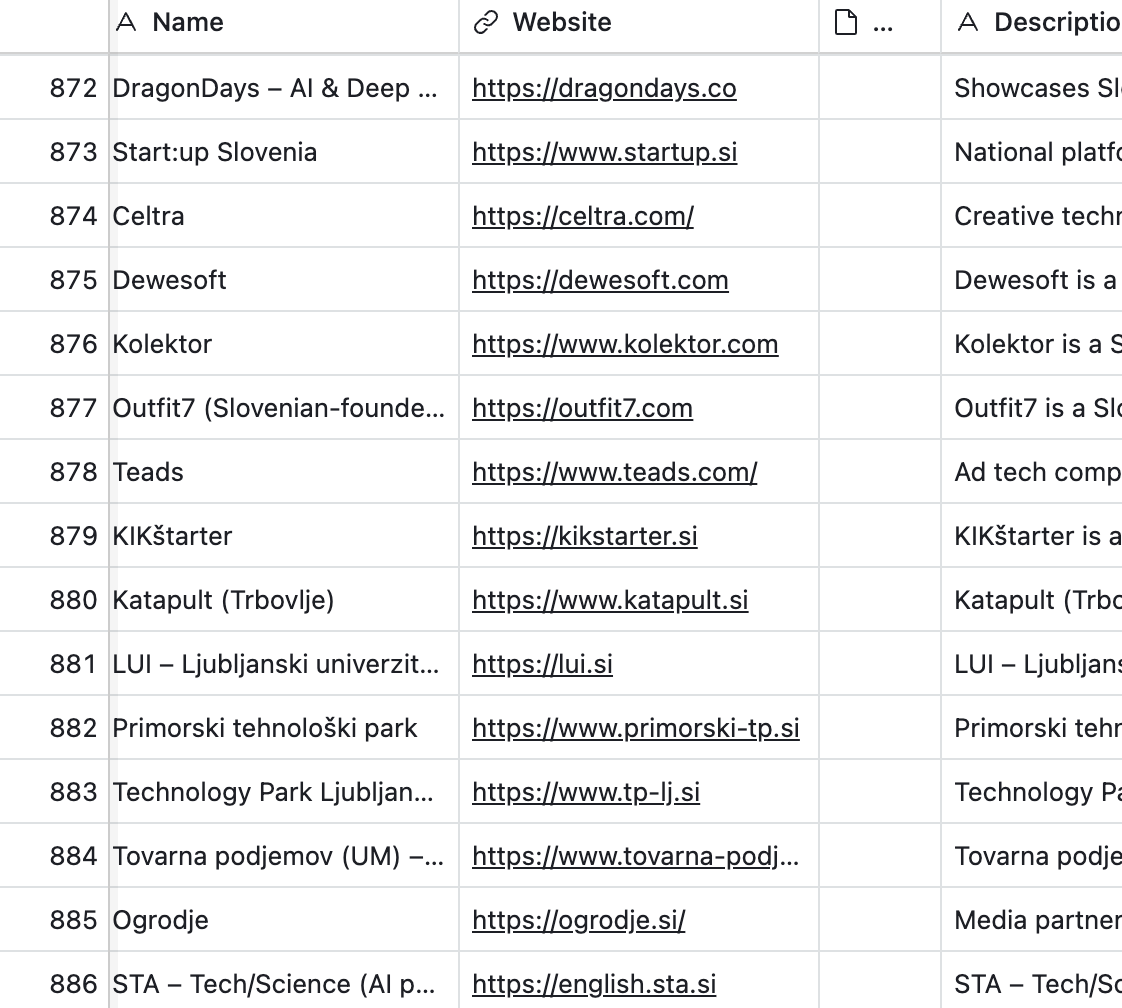
We read the file and show you what we found: how many real companies, how many duplicates, what is missing. Then a fixed price, within 24 hours. No obligation to continue.
-
You approve and pay
Sign off on the scope and pay via Stripe. We start the same day.
-
Your map goes live
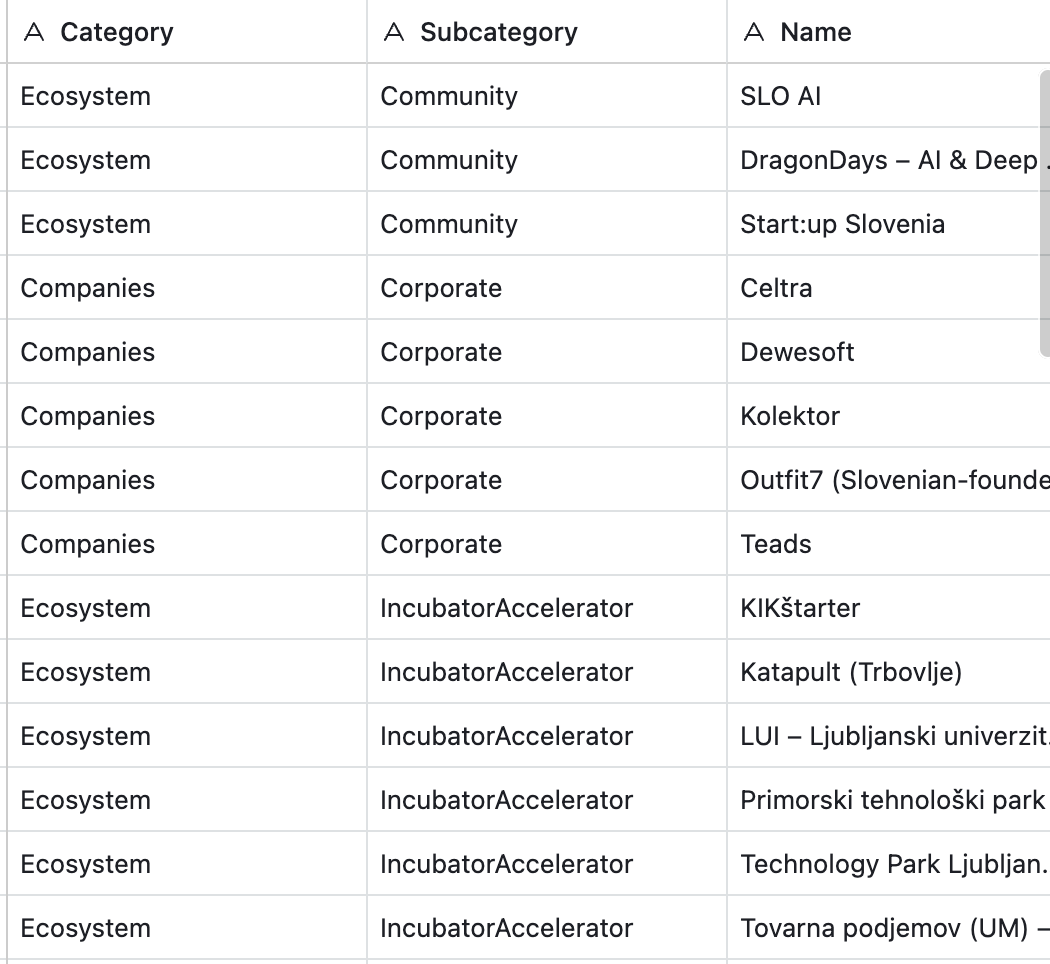
On your own domain or embedded in your site. The cleaned dataset comes back to you for your CRM. You own it.
Automation advantage
Pricing: ~$1 per record.
We use repeatable cleaning, enrichment, and taxonomy workflows to reduce the manual effort behind map builds. Final scope still depends on row count, taxonomy complexity, enrichment depth, and refresh cadence. $250 minimum.
Send us the list. See what is in it.
Your members are doing more than your directory shows.
Send us your member list. We will tell you what is in it, what is missing, and what it would cost to publish — before you commit to anything.